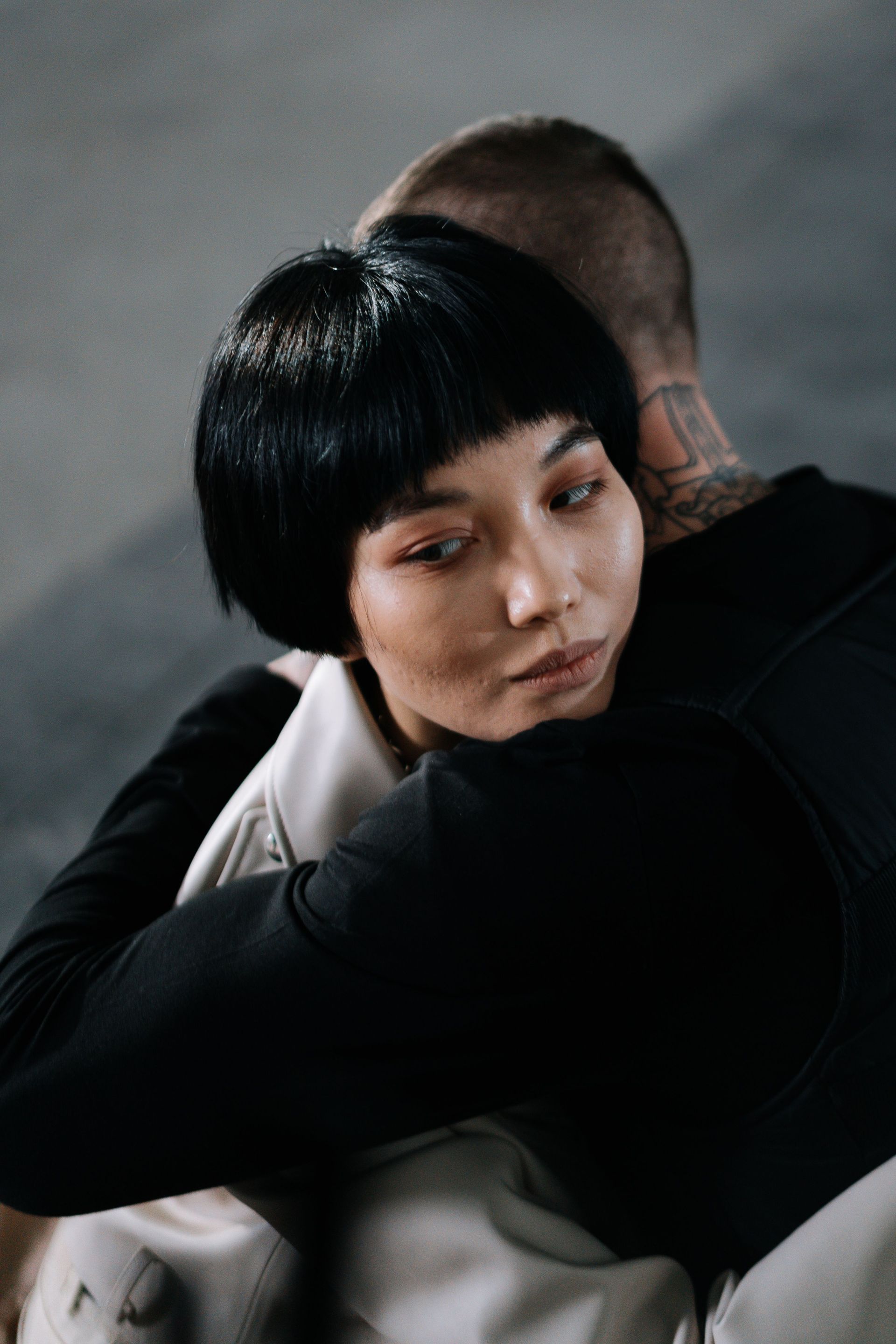
Why Feel? (The Reprise)

Kerrie Hudson • November 25, 2026

The other day I saw an Instagram post that inspired me. Not because it was what one would call encouraging or inspiring, but because it reignited a curiosity that I had struggled to make sense of years before. A woman stood and said that “holding in emotions increases your dementia risk.” In that moment, I began to wonder all over again. While my experience was specific to Alzheimer’s disease, the statement immediately made me think of my paternal grandmother.


As a young girl, I saw her regularly sit alone at home in silence. She went through the motions of life. She cooked. She went to her Kingdom Hall meetings. But I didn’t see her do much else. No friends. Fairly emotionless interaction with family. Living a life I thought was quite boring. Back then, I knew she was married to a truck driver whom I rarely saw and can’t remember seeing her happy with at all. Overall, she was just there. She didn’t interact with me much, although we were both just there. She didn’t really laugh or smile. I didn’t see her cry. She was just there.


Looking back, I know life was tough. Her first husband, my grandfather and father of her kids, was an alcoholic who left her to raise all five of them alone. Of the five kids, three were addicts. My aunt, her youngest, died from an overdose at an early age. My uncle later died from complications related to diabetes. And her middle child, my other aunt, was relatively problem-free. Given what I know, my grandmother should’ve been a wreck, but she wasn’t. She was a zombie.


I first saw the signs of her disease in my teenage years while riding with her she literally forgot what side of the street she needed to be driving on. Years later, I watched her die from Alzheimer’s. She hadn’t just forgotten who I was. She had forgotten everything. The last memory to go was how to swallow. It was terrible to see her die that way.


Her deterioration made me curious. I wanted to understand it. What would cause someone to forget something as natural as swallowing? I mean, is that something we even learn? Fetuses begin swallowing in the womb, so how could she forget? And in one Instagram post, questions from years earlier resurfaced, and I now had a bit of a framework from which to better examine them.


But first, the research. Because regardless of how tantalizing this statement was, I couldn’t just run with it. And as you might suspect, the woman took actual research and pared it down into a soundbite that’s deceiving, but not totally wrong.


According to my research, there are actually two studies related to this claim. A 2013 study published in the Journal of Psychosomatic Research, where higher emotional suppression was linked to a “35% higher risk of all-cause mortality and 70% higher cancer mortality,” not dementia specifically. Additionally, a 2020 research abstract published in Alzheimer’s & Dementia reveals that people who admitted they suppress emotions had a “4.93 times higher hazard ratio for dementia.” The hazard ratio in this case suggests the estimated rate of developing dementia was five times more in this group than those who didn’t suppress emotions. While these results are compelling, at face value, they don’t reveal everything, which I won’t go deeply into. What I will say is that the dementia findings were based on a survey of a little over 1,100 people and the 4.93 ratio estimate had a wide margin of statistical uncertainty. In short, the research suggests an association between emotional suppression and dementia, but doesn’t prove it’s the cause of dementia.


I do, however, want to make a claim for why this shouldn’t just be ignored. While I wasn’t with my grandmother every hour of the day to know for a fact how she handled emotions, or whether emotional suppression played any role in her Alzheimer’s disease, I do know quite a bit about emotions and their relationship to our physical health.


Emotional suppression is the restraint of emotional expression, like crying or even laughing. Prolonged or regular suppression, to the degree it becomes a habit can lead to emotional numbing, which is the process of muting or detaching from emotions. Dissociation is another pathway through which we can experience disconnection from emotions. Through dissociation one experiences disconnection from their own body, typically as a means of coping with extreme pain or discomfort. Habitual suppression can lead to disconnection from your body and feelings altogether. Which I understand is the point. However, when you cut yourself off from feeling, you risk getting too good at it.


Emotional pain, like physical pain, can be felt in the body, and we usually want to avoid both. Physical pain can be more easily dealt with. Remove the physical issue, remove the pain. And when the physical pain can’t be removed, it usually has an emotional and psychological impact. Emotional pain is similar, except you cannot always just remove the emotional issue.  And if you already have a habit of ignoring or suppressing emotions, pain is being inflicted but you’re numb to it. What once was protective can become dangerous. You’re being harmed, but unaware of the extent of the harm. You most certainly have no idea what the issue is or what the first step needs to be to remove it. You’ve become disconnected from yourself, your own needs, and your means of survival.


I see it all the time in my clinical work. There are people who avoid emotional discomfort like the plague. I lean into their emotions, inquiring about what they feel like in the body, and instead, they choose to focus outside of their bodies. I totally understand it. What’s happening externally often feels more tolerable, even more natural, than the uncomfortable emotions. What they usually don’t recognize in the moment is that this tendency to ignore feelings may lead them to ignore all of their feelings, emotional and physical, which can have medical implications. And yes, many of my clients who emotionally suppress and numb have medical challenges. And what’s more, without feeling, they’re left right where they are, in the cesspool of pain. They aren’t motivated to exit the painful circumstance, or to change the way they show up for themselves, just to complain about it and focus on other things.


I have clients who have developed such a habit of ignoring their feelings that they go as far as forgetting to eat and drink because they don’t recognize their own hunger and thirst. By the time they realize how far they’ve gone, they’re in medical distress. Suppressing feelings is not the answer. It can compound an already painful circumstance, and compel us to deal with the thing we worked so hard to avoid.


The same was true for me. I couldn’t access all the feels I felt while enduring a painful twelve-year marriage. I didn’t even know what to feel. It wasn’t until I saw the shock, pain, and outrage on the faces of friends, family, and even my therapist that I realized I was in a painful environment that I mistook for love. I got out before I felt all that pain, but feeling it later motivated me to do the work necessary to never feel that way ever again.


So, I get it. No one wants to feel bad. And if we never feel bad, though bad things are happening, how will we take care of ourselves? It’s like the rare condition known as congenital insensitivity to pain (CIP) where people who are diagnosed with it can’t feel pain. It’s sort of a blessing and a curse. There’s no pain, but the lack of pain causes them to be more susceptible to death because they can’t physically detect a threat and stop it. Pain tells us that something is wrong and needs to be attended to.


Emotions are no different. They give us clues about ourselves, our circumstances, or environment, or both. When it comes down to it, there’s a benefit to pain and discomfort. It gives us information about where the issues lie. As we heal from trauma and recognize the distinction between triggers and emotions, we can use our emotional pain to reveal people around us who are unsafe. It can hint to us that we’ve been wronged. It can say, “Hey, we’ve got to get out of here.” Conversely, joy, pleasure, and peace, which are also numbed when we emotionally suppress tell us when we’re safe and all is well. When we feel, we can easily detect what we want more or less of, and ultimately take the steps to provide for ourselves.


Feeling isn’t just about avoiding what might happen to us years from now. It’s about embracing our ability to live our best lives today. When we feel, we increase our ability to recognize what we need, what we want, and what needs to change. So, feel. It’s not easy, but it’s worth it.


By Kerrie Hudson • October 20, 2026
Spoiler alert. Let’s get straight to the answer. The way to know if he’s good for you is to take the time to get to know him. I know, I know. Duh, Kerrie. It seems like a simple answer, and I’m certain that getting to know him is exactly what you think you’ve been doing. And yet, if you had actually taken the time to get to know him, how do you keep arriving at the conclusion over and over again that you didn’t know any of them at all? How are you surprised at how it all ended? This answer is also pretty simple: you’ve known who you wanted them to be; you didn’t really know them. Like many women, you’ve likely found yourself certain about a love prospect only to find that you were certainly wrong when it all blew up months, years, maybe even decades later. After a few failures, you’ve either sworn off relationships altogether, or you go into each of them with trepidation, wondering, “How can I be sure this time?” And the answer is, you can’t. Not without significant time spent getting to know this person, and more importantly, getting to know yourself and the mindset that you bring to choosing. Until now, you’ve chosen based on vibes and intensity instead of values and character. You’ve chased the high that swells from a flirtatious exchange or that craveable attention or that look of desire he always gave you. I get it. It felt good. And in the words of my granny, it wasn’t worth a nickel. You placed all of your value on the feels, and you ignored the thing that sticks around long after the spark fades: character. You see, it’s who he is when he’s not giving you excessive attention or spoiling you with things or touching you in a way that drives your body crazy that creates the experience you’ll live with from day to day. And because he was so good at giving you the feels, you excused his behavior and projected onto him the person you wanted, and likely needed him to be in order to make this work. And when the vibes settle and the excuses fade, you’re left with the thing you ignored all along: the truth of who he’s always been. He didn’t trick you. I’m sure he lied and deceived, and that’s on him. And as hard as it may be to receive, you tricked yourself by setting aside your discernment because you wanted what he fed you to be true. And we’re not doing that anymore. If you want to choose well, you’ve got to view well. Set down the rose-colored glasses and put on the clear spectacles that bring things into 20/20 vision. You don’t need to magnify what you see, and you certainly don’t need to diminish it. You just need to see things as they are. Doing that takes time. So, if you’re going to choose well, you need patience. Slow down. I know that love feels urgent. Society places all sorts of pressure on women to get married and start families. But trust me, doing any of that with the wrong man is far worse than you can ever imagine. Churches, families, friends, heck, even strangers add pressure, and you don’t have to succumb to it just because you’re trying to do things the “right way.” At times, your choices can feel very natural, and he can feel right. If he is right, what’s the rush? Really? And maybe you’re asking, “What am I waiting for?” It’s this. The purpose of patience is to give yourself the time to gather information. Who is his family? What are their values (because he isn’t likely to stray too far away from them)? Who are his friends? How does he handle responsibility? Conflict? Disappointment? And most importantly, how do you feel engaging with him in all of these scenarios and more? If you’re going to live a life with him, what are the samples of life revealing to you about his character? Be honest with yourself. There’s no point in engaging in any of these exercises if the goal is to have HIM at all costs. If the goal, however, is to choose a good man, it’s not enough to just see him as he is, it’s being honest with yourself about what you see. Often honesty is replaced with excuses. And to your credit, he’s made it easy for you to lean into them. Before you saw his issues, you heard his explanation for them, which made it easy to excuse poor decision-making and bad behavior. You’ve got a reason for things like interpersonal conflict, estrangement from children, and his life struggles, and he isn’t at the center of any of it. The challenges in his life are all their fault. He sold you the sob story, and you ate it up. Not only are you there in support of him, but you’re on the front lines fighting his battles and working to clean up his messes that he continues to make every time you turn away. Not only have you chosen wrong, you’re now invested, which often leads to significant loss. And again, we’re not doing that anymore. What we are doing is taking the time to get to know ourselves and the reasons for our choices. There is a reason you’ve been choosing the same man over and over again, and this is a cycle that is within your power to break. Because there is a man who’s good for you, and no one will know him other than you. The key is knowing what’s good for you. What do you want? What do you need? And who’s most suitable to give those things to you? In large part, you couldn’t know what was good for you if it knocked on your front door because you didn’t know yourself. You haven’t even known what it means to truly care for yourself beyond meeting your physical needs. This is why it’s been easy to settle for behavior that’s painful. And I want better for you. As I mentioned before, there’s no way to know for certain that he’s right for you without significant evidence. And even with evidence, the key is to become certain about your ability to do what’s best for you, and that requires putting in the work to heal and overcome some things. Because the power and ability to choose what’s best for you have been in you all along. They’ve just been pushed aside by the thing you keep running back to: pain. And we’re healing that.
Woman walking away
By Kerrie Hudson • September 15, 2026
You know the relationship is toxic. You know you should leave. So why do you stay? Learn how familiar relationship patterns can keep pulling you back.
By Kerrie Hudson • August 11, 2026
I was reflecting on the relationship I have with my older sister. Well, we don’t have much of a relationship today. Growing up, she was my very first trauma bond. Verbally, she expressed so much love and care, and at the same time, I experienced so much hate at her hands. I loved her. I was loyal to her. I was confused. That’s essentially at the core of a trauma bond. Confusion. And if the trauma bond itself isn’t confusing enough, they can be found everywhere: in churches, families, and especially in love, making them so difficult to detect. When you’ve grown up in a family where you were trauma bonded, then possibly a church or another institution where trauma bonding runs rampant, the dynamic becomes commonplace. In fact, it feels like home, a smelly one. One where visitors detect it, but the people who live there are oblivious. Just like someone who’s invited you into an offensive home, the realization that you’ve been trauma bonding can produce shame. In both situations it’s easy to overlook. Many people do. There’s nothing to do about the past, and taking responsibility for the future is key. But first, the issue at hand. At worst, a smelly home is offensive. But trauma bonds? They hurt. And that pain can go unnoticed for a while. Often, the pain of a trauma bond is first perceived by recognizing its impact on another. In churches, it looks like a pastor or authority figure hurting others while the congregation defends them. Eventually, the protection emboldens more abuse, and the hurt spreads. Some walk away, others continue to endure it because they hold onto the good and reject the bad even though it hurts. That’s the bond at work. In a family, a child defends the parent who hurts the other parent. They don’t understand the dynamic because the abusive parent is kind to them. Eventually as they grow, they are directly targeted and abused. In spite of the pain they feel, they hold on, because it “isn’t that bad”. The child knows two people, one who’s kind, and one who’s abusive. They want to believe the former is the “real them”, while they work to appease the latter, and it grows more intense. Early experiences like these create the mindset that causes you to hope for the best while experiencing the worst instead of walking away. It’s the setup for leaning into love that hurts, until it hurts so much that you eventually have no choice but to walk away. It’s a part of the relational blueprint you developed early that dictates love is supposed to hurt, at least a little; and when you tolerate a little hurt, you will tolerate a lot of it. When the warning signs of a trauma bond are visible to others, the people closest to you can see it; even those who can’t see it in their own relationships. They may not know what it’s called, but they can detect its impact, either now or in the future. If they intervene (and it’s best that they do), their expressions of concern can land as a threat to one of our most basic needs, love. It can also reinforce shame due to the exposure of the truth that you’ve been explaining away or hiding from yourself to make love work. Ultimately, it can lead to isolation and even more pain. For many people, instead of taking the intervention into consideration, they reject it, and often reject the people who love them most. The presence of pain, now or in the future, isn’t a big enough threat because it aligns with what you’ve come to believe love is. So, of course you’ll chase the trauma bond, because this is what “love” has always looked like. Love, or the potential for love, can be blinding to the reality of pain, especially if you’re starting with an unhealthy blueprint. The key is to take an honest look at the blueprint to determine how you got here, and to re-work it so it leads you to real love, not love as you’ve known it, but the love you desperately desire. I know that part of you may be pushing back, because you’ve already tried doing things differently, and it didn’t work. Journaling, listening to podcasts, and even taking the steps to fix your approach or your appearance. None of these are wrong; they are incomplete. You can’t attract something new from an old mindset. What you haven’t yet tried is doing the actual work of healing: exploring the dynamics that led you here, embracing thoughts of new possibilities, and becoming the person who no longer tolerates unhealthy dynamics so she has room for healthy ones. That’s the work. If you’re ready to do the work, The Restoration Group is where it happens. You learn the signs of abuse, and more importantly you’ll learn to detect it, to feel it in your body, to trust yourself. You’ll explore the difficulties of your attachment style and relationship dynamics and rework them to healthier ways of relating. The most important work we do is restoring the relationship with yourself, because if you don’t love you, you’ll reject anyone who does. Join this powerful group of women as they become the women they never imagined they could be. The next cohort begins this Thursday, August 13 th . After that, there’s only one more opportunity to do this work for the rest of the year. Register now.