Leaning Into Self-Love

Kerrie Hudson • October 8, 2025

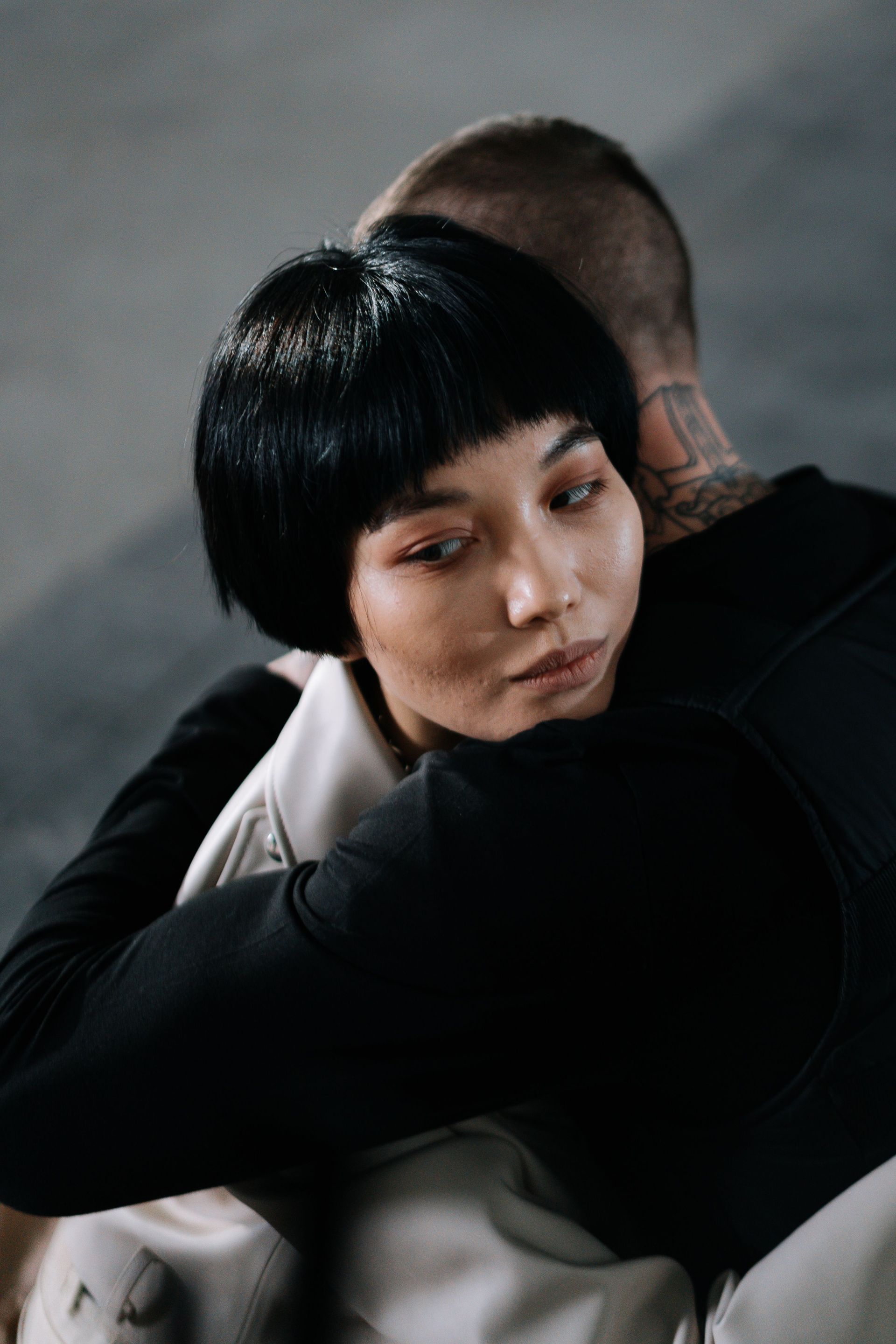
You’re pretty amazing! Yes! You.


In spite of everything you’ve been through, you’re still killing it in life; and the one thing that’s stopping you from accessing your fullest potential is you.


You’ve mastered achievement, and if we’re being honest, you’ve limited yourself there as well, but where you can’t seem to win is in love. The reason is simple, you’ve never learned to love yourself. You learned instead, that the failure of the people who were entrusted with the responsibility of loving you was a reflection of you, and that couldn’t be further from the truth.


All this time you’ve believed that there was something inherently unlovable about you. What you never understood, because no one ever told you, is their behavior was never a reflection of you, it was a reflection of them. They didn’t love you because they didn’t know how, and now it’s on you to break the cycle of lovelessness for you and the generations that follow you.


This is your time; your time to experience love because that’s the one thing we’re all longing for. It’s the purpose of families, friendships, and romance; and you’ll never truly experience it until you learn to love yourself.


I know what you’re thinking, “I already love myself”, and to some degree you do, but not for the reasons you’re giving yourself credit for. You’re thinking about all the achievements and the ways in which you take care of yourself, and quite frankly, those are all performative or surface-level at best. Meanwhile, at your core, you are lonely and deprived of real heartfelt love, even in a crowd; and that’s not love.


The easiest way to detect your love for yourself is in how you show up for yourself with others. People pleasing, a lack of boundaries, an inability to say “no”, and giving without reciprocity are all symptoms of a person who lacks self-love. These behaviors indicate you are forsaking yourself while looking for someone else to love you, and they never will. The truth is you can’t tolerate real love from others and you’re stuck in a cycle of inviting people in who reflect the lovelessness of those who reared you. That sword cuts both ways, and it’s time to put it down.


You want love, and it’s time for you to realize that it must come from you. The most important step in loving yourself is choosing to love yourself. No one explicitly told you that you were unlovable, you simply surmised it from their actions. (And let’s be clear, you’ve always been smart – brilliant even. Wise? That’s a newer skill that comes with setting aside a childish mindset.) As a child, you couldn’t properly understand the actions of those around you without intervention, and you’ve been carrying around false beliefs about yourself your entire life. The assumption that you’re unlovable has led you to years and years of pain. All of your choices have stemmed from this belief.


By shifting your mindset to self-love, a mindset that recognizes your worth, you are unlocking the joy and fulfillment you always knew was possible, but thought only existed in the arms of another. When you stop relying on others to love you and you begin to love yourself, you guarantee yourself love, and all of your choices will align. Your love for yourself will attract love, just as your lovelessness has piled on pain.

Woman peacefully journaling
By Kerrie Hudson March 10, 2026
There’s a lot of talk about protecting one’s peace these days, but what does that even mean? And how do you protect your peace? Let’s dig in. Peace is an emotion. In psychology there are five basic emotions that are widely accepted: anger, sadness, fear, disgust, and happiness. Unfortunately, of the five only one would be considered a positive emotion, though I believe all are positive in that they provide you with information. But I digress. Happiness, the more positive of the five is the one emotion you likely welcome with open arms, and when it comes, you want it to stay. You protect it. Peace lives on the spectrum of happiness, and like all other emotions, it is literally a feeling in the body. It feels like serenity; there’s stillness and a calm that comes over you. I’ve had folks identify peace in their bodies as the absence of the feelings they’re accustomed to: tightness in their chest, sweaty palms, stomach discomfort, etc. For many, peace is rarely felt, so when they feel it, or any other emotion for that matter, they fail to recognize the environment that nurtured it; and if you’re going to protect your peace, you’ve got to notice when you feel it and what contributed to it. Understanding peace as an emotion is necessary because the role of your emotions is to provide you with information about your environment. At times, emotions can be so intense and distressing that the focus shifts from the environment that ignited them, to suppressing or extinguishing them. But emotions aren’t the problem, the environment is. Every emotion is important, even those that you’ve identified as negative. They tell you that something in your circumstances or environment needs your attention, and when you ignore your emotions, you ignore the task at hand. Peace is a gift, and not everybody or every environment offers it. When you notice peace in your body, you also need to notice what nurtured it. Are there people who bring peace? Are there places where you feel more at ease? Identifying these sources gives you what you need to take care of yourself by accessing more of it. On the other hand, where do you experience the opposite of peace? Where, and with whom do you find chaos and confusion? If you’re going to protect your peace, these are environments and people who you need to limit contact with. If you’re going to protect your peace, you’ve gotta increase your self-connection by noticing your emotions, and allowing them to tell you what you need to increase your overall well-being. When you fight your emotions, you fight yourself and your best interests. Extended periods of suppressing emotions can lead to depression, anxiety, and other mental health conditions because two things are working against you: you are becoming more disconnected from yourself while existing in environment that don’t serve you. There’s no magic pill that creates more peace and happiness, it’s the consistent work of nurturing self-connection and meeting your needs, because you are the most important person in your world. May you grow exponentially in peace! If this resonated with you, you’re not alone. These are the conversations we continue inside Next Chapter: Notes from The Other Side, my monthly newsletter where I share insights, reflections, and guidance for women breaking toxic patterns and learning how to love themselves differently. Join Next Chapter here
By Kerrie Hudson February 8, 2026
The new year typically comes with a desire to be successful in an area where winning has been challenging. As such, we spend time thinking about what we want for the year ahead and commit to doing things that will help us achieve our goals. The challenge many of us run into is that we quit on our goals before we can clear the first few months of the year; so, while January is still with us, I want to share with you some information about what I believe to be the number killer of success, anxiety, and how to overcome it so you can have a greater chance at winning this year. Regardless of your goals, anxiety has a way of stepping in and stealing your motivation before you can gain much momentum. It’s the quiet voice lurking in the background telling you that you can’t have what you really want because it’s too hard, or you’re not good enough, or if you do attain it, something terrible will come along and take it away. Essentially, anxiety is at the heart of why you settle; you’ve listened to that little fearful voice that’s informed only by your limited experience and/or imagination, and convinced yourself you can’t have the thing you deeply desire; so your only option is to go without the tightened body, or the love you deserve, or the business that would positively impact the lives of others, which ultimately leaves you dissatisfied and even regretful. You’ve given up on your goals and dreams because of something that might happen, but probably won’t. If you’re going to disrupt this cycle the key is to challenge your ego. Many people believe the issue with the ego is cockiness and arrogance that leads one to see themselves as above others, and while that’s true, what most people fail to understand is the arrogance in perceiving fear as fact versus seeing it as just one of many possibilities. When you see your fears as fact you treat them as certainty and you make decisions that align with them, ultimately shortchanging yourself of the life you deserve. In reality, the ego can work for or against you, and combined with anxiety, an unhealthy ego will kill your ability to enjoy your life and achieve your goals. So, if you you’re going to succeed in anything and have a good time doing it, you must check your ego and anxiety so they don’t keep you in a constant state of settling in fear. If left unchecked, the ego will convince you not to invest too much or not to try too hard because “this probably won’t even work”, or “nothing good ever happens for me”. It will see losses as catastrophic events and overinflate the importance of a few outside opinions. Its goal is to keep you safe, when in reality, the things that pose a threat to you are likely not threatening at all. The key is balancing the ego by removing certainty from your beliefs, because anything that hasn’t yet happened isn’t certain, it’s a possibility. When you begin to see your fears as possibilities you can move from a place of guardedness to a place of curiosity; this helps you to open yourself to more possibilities than the one rooted in your fears, and when you see more possibilities, you can free yourself to take risks (which is necessary to succeed). With this shift, you can begin to see losses as lessons so you can use your setbacks as a setup to do better, to refine your approach, to put the proper supports in place; and as your gain more experience, you’ll begin to see realistic likelihoods of what can happen over possibilities and certainties, reducing the size of your fears. You begin to think “if I take these steps, it is possible that I won’t achieve my goal, but it is likely that I’ll be closer to it than if I settle here”, and when you take on this perspective beautiful things happen.
Gate symbolizing boundaries
By Kerrie Hudson December 21, 2025
Most of us are trying to improve our lives, and as such, we can cling to ideas and concepts that we believe will help us to get there. A lot of times these ideas and concepts lose their true meaning and become a crutch that we lean on to resist change, instead of a skill we develop to become a better us. Boundaries is one of those concepts that’s often used, rarely understood, and often weaponized in ways that keeps us stuck in the same old patterns; that changes for you today. Simply put, boundaries are our deeply held, internal ‘no’, and when our boundaries have been violated, you feel it. Think about the feeling you get in your body when you’ve waited for a parking space, and someone steals it, or when you’ve loaned someone money that they fail to repay; these are boundary violations. Boundaries are the line we’re not willing to cross in our interactions with others, and that line is your responsibility to maintain. For example, you may have a boundary that dictates you don’t loan money; but, if someone asks you to borrow money and you give them the loan, you have violated your own boundary, and that feeling is far worse than violations from the outside. When you don’t know and/or do not articulate your boundaries you are hurting yourself, and that type of behavior sets you on a course for a world of pain. When you fail to take responsibility for your boundaries it becomes difficult to trust and depend on yourself; and if you can’t trust and depend on you, who can you really trust? Bottom line, boundaries are ingrained into the fabric of our person, they don’t go away; and boundary-setting and protection are necessary skills to develop in order to become a confident and self-assured human who is fulfilled in life. If you struggle with identifying and honoring your boundaries, Becoming Her Again is the gamechanger you need to step into the woman who no longer shrinks or settles for less than she deserves. The course is coming soon, join the waitlist to be the first to access this powerful resource. (P.S., it comes with 2 bonuses: The Boundary Starter Pack & Scripts for Difficult Conversations)